Avoiding PM Burnout: Strategic Prioritization and Saying “No” in High-Velocity Environments
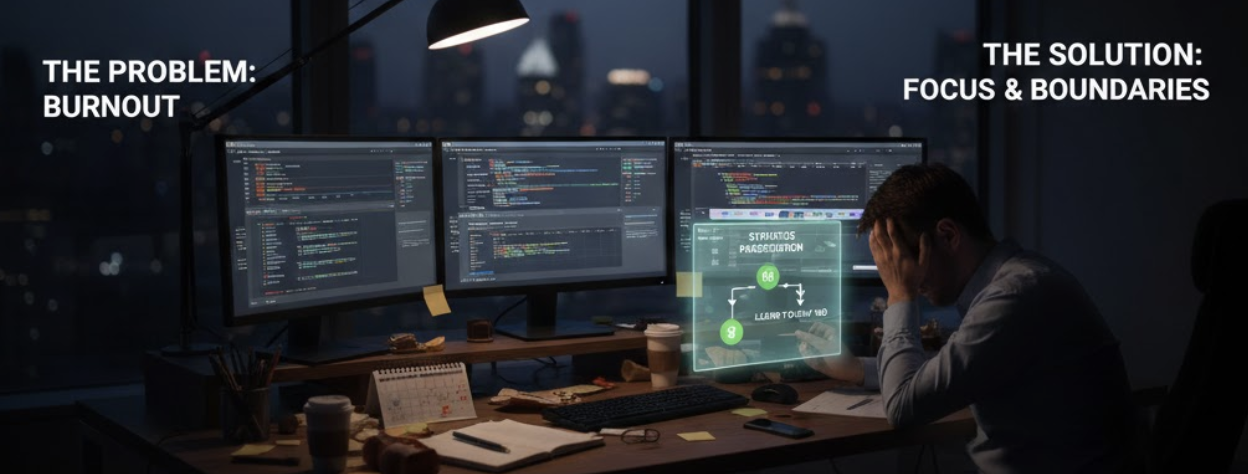
Product managers operate at the intersection of customer needs, leadership demands, and engineering constraints. In a fast-paced environment, this often leads to overloaded backlogs, shifting priorities, and eventually—burnout. The real skill isn't doing more; it's choosing what not to do.
Why PMs Burn Out?
PMs often face constant context switching, unrealistic expectations, and unclear prioritization. When every request feels urgent, decision fatigue creeps in and productivity drops.
Strategic Prioritization
Move from tasks to outcomes
High-performing PMs shift from “What needs to be built next?” to “What moves the metric?”
Example – Swiggy Instamart: PMs cut noise by prioritizing features tied directly to order frequency and customer satisfaction, helping them ignore low-impact requests.
Use prioritization frameworks
Here’s where clarity beats chaos. Tools like RICE or Impact/Effort help justify decisions and avoid emotional escalations.
Example – Intercom: Implemented RICE to defend roadmap choices, eliminating last-minute feature pushes from internal teams.
To prevent burnout, PMs can adopt:
- Theme-based sprints (focus reduces stress)
- Data-led decisions (removes subjective pressure)
- Opportunity cost framing (“If we do this now, what slips?”)
- Clear roadmaps (easy way to say “not now”)
Mastering the Art of Saying “No” (Without Saying “No”)
PMs can protect bandwidth by reframing conversations:
- “Yes, if…” → shifts the trade-off decision to the requester
- “Let’s validate the scale first” → redirects to data
- “This isn’t on the roadmap this quarter” → reduces pushback
Example – Airbnb: Feature requests are evaluated based on how many bookings they impact; most low-impact requests are politely deprioritized.
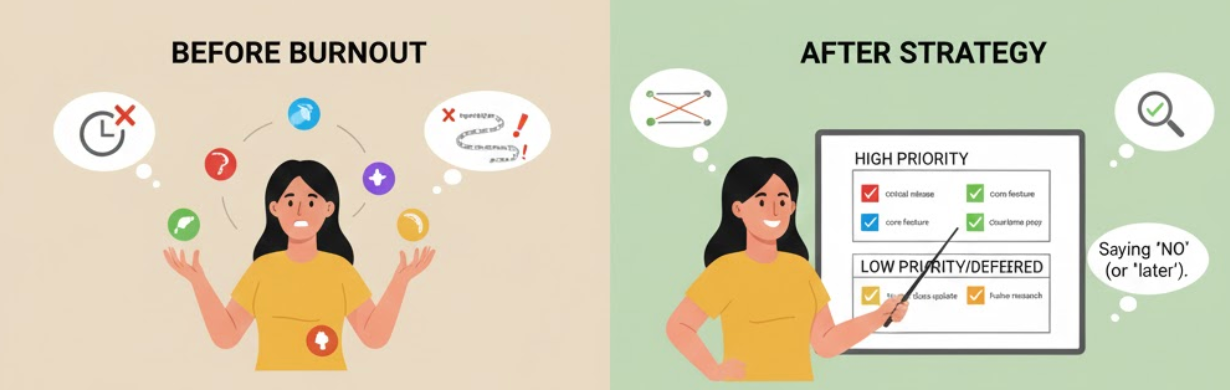
Tactics PMs Use to Protect Themselves from Burnout
- Protect 2–3 hours of “no meeting” time every day for deep work
- Cluster meetings on specific days to reduce constant context switching
- Prefer async updates (Slack, docs, Looms) over unnecessary calls
- Pause feature requests with “I’ll validate this and revert”
- Share the load on customer issues so one person isn’t always firefighting
Conclusion
Burnout isn’t a badge of honor. PMs who set boundaries, prioritize strategically, and communicate “no” with clarity not only stay sane—they build better products. Sustainable PMs create sustainable teams.