Outcome-Driven Roadmaps: Moving from Feature Factories to Impact-First Product Teams
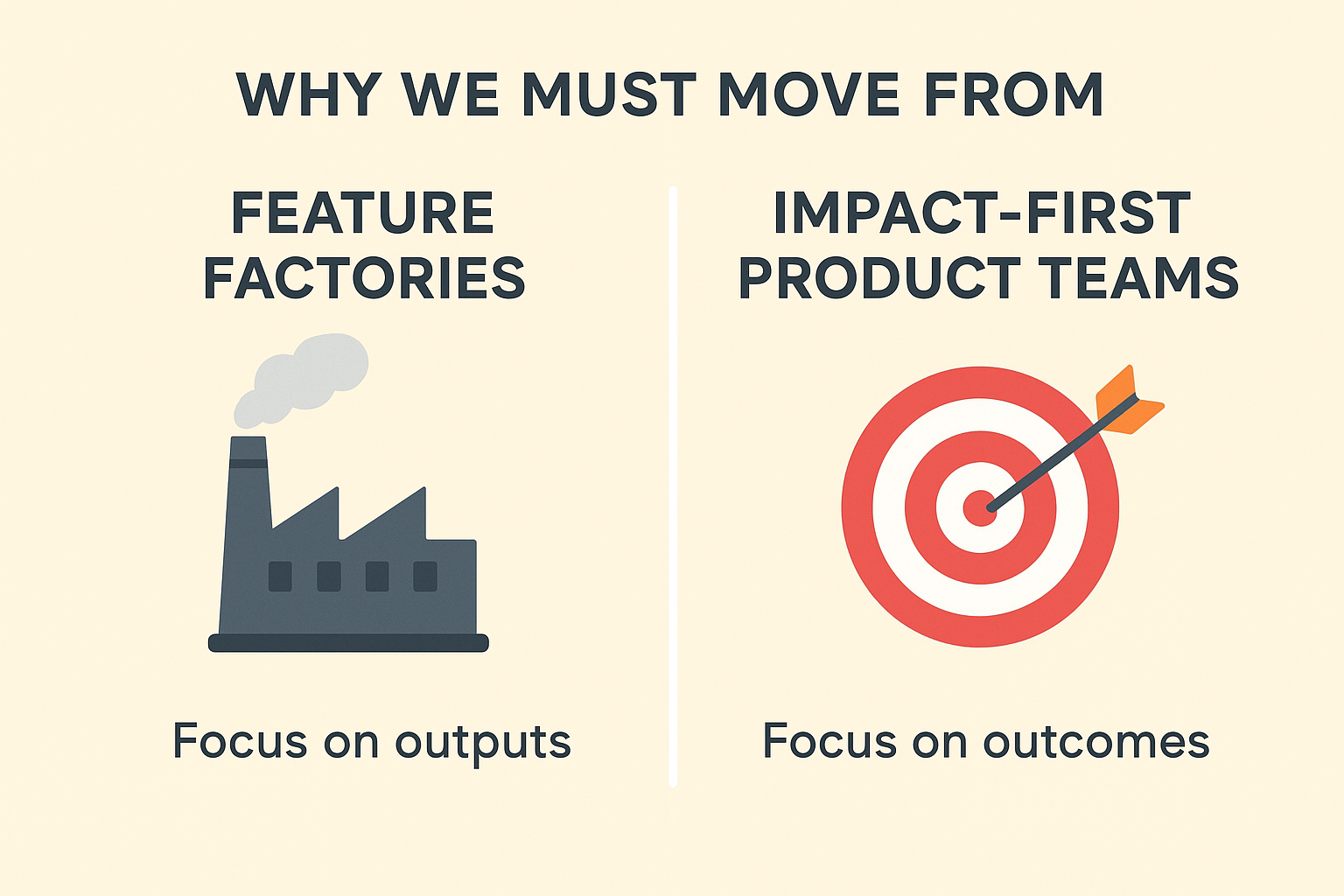
Many product teams celebrate how much they ship—new screens, new buttons, new updates—believing that constant output equals progress.
But in reality, users often don’t feel any difference, and business metrics remain unchanged. This exposes a core problem with feature factories: they prioritize activity over impact.
Delivering more features doesn’t automatically create more value. In fact, adding unnecessary options can increase complexity, confuse users, and distract teams from addressing the real issues.
What truly matters is solving user problems in a meaningful way. When teams shift from a “What can we build next?” mentality to “What user outcome are we improving?”, they make decisions grounded in purpose, not pressure.
This shift transforms how teams collaborate, how they prioritize, and how they drive measurable success.
Why the Shift Matters
- More features don’t guarantee value: Without improving behaviour, satisfaction, or retention, output is just noise.
- Users want solutions, not clutter: Real impact comes from removing friction and addressing genuine pain points.
- Outcome clarity improves alignment: When teams rally around a target outcome, decisions become faster and more focused.
- Business growth follows real impact: Solving meaningful problems increases retention, revenue, and customer trust.
A powerful example of outcome-led thinking is Rapido’s Pet-Friendly Rides. This wasn’t crafted to add a fancy feature to the app—it was born from a repeated real-world problem.

Pet parents struggled to book rides without facing cancellations or discomfort, creating anxiety around something as basic as commuting. Rapido addressed this exact pain point, allowing pet owners to travel confidently and reliably.
The value wasn’t in the feature itself, but in the experience it transformed and the trust it built. That’s the essence of outcome-driven product development.When teams focus on outcomes instead of features, roadmaps become clearer and less crowded, as they revolve around solving high-impact problems rather than filling releases with low-value items.
Metrics also start moving for the right reasons—because users feel genuine improvements. The product evolves with purpose, not noise, and teams build solutions that actually matter.
In the long run, it’s not the number of features a product carries that makes it stand out—it’s the outcomes it consistently delivers and the problems it truly solves.