Product-Led Growth in 2025: Building Feedback Loops into Every Feature
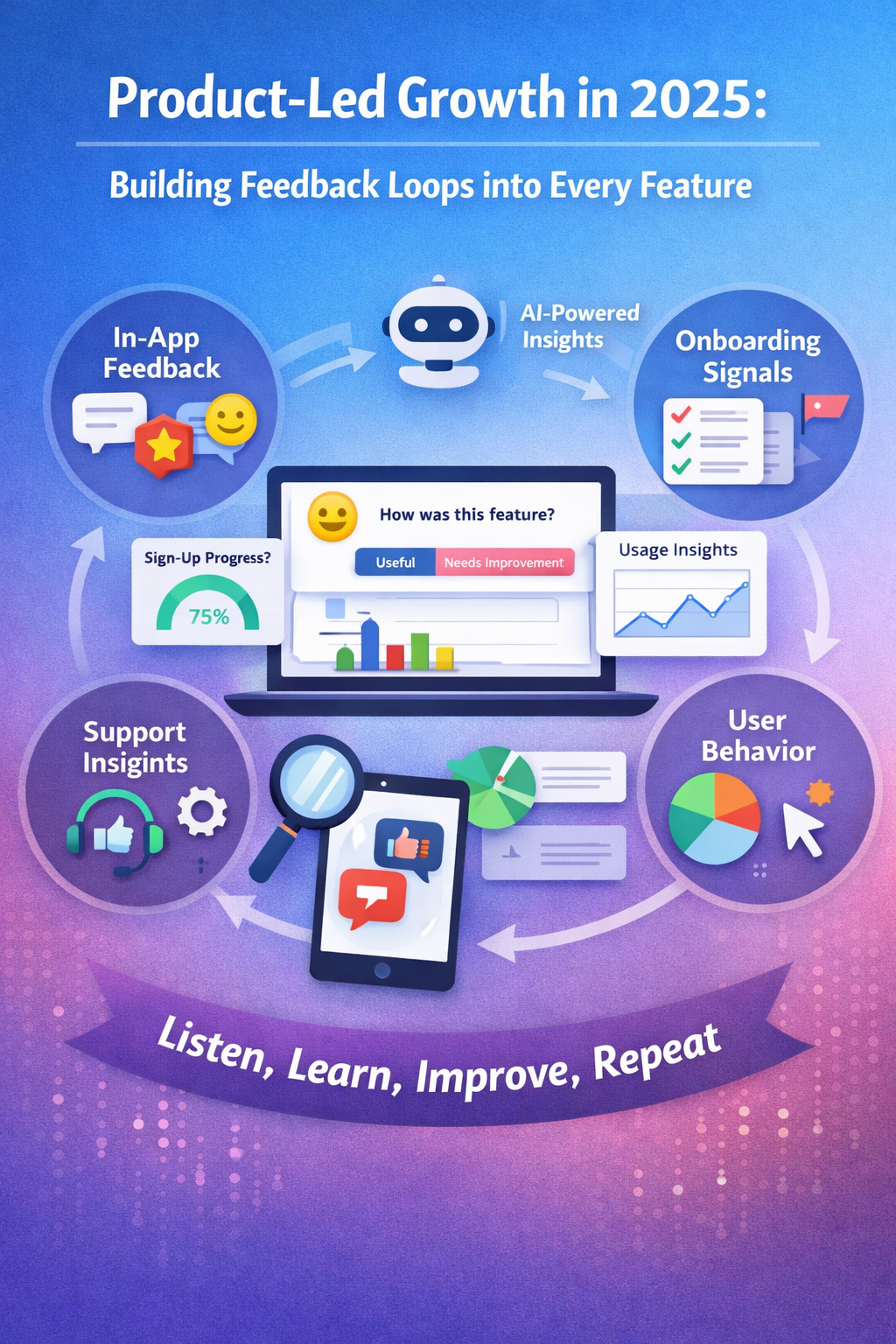
Product-Led Growth (PLG) isn’t new—but in 2025, it has matured. Today, the products that win aren’t just easy to use or beautifully designed. They listen.
Modern PLG companies don’t treat feedback as a quarterly survey or a support ticket backlog. Instead, feedback is embedded directly into the product—quietly, continuously, and intelligently guiding every decision.
Why Feedback Is the Real Growth Engine Now
In the early days of PLG, growth meant:
- Freemium models
- Fast onboarding
- Viral sharing loops
- Those still matter—but they’re table stakes.
Today’s users expect products to adapt to them. If something feels confusing, slow, or unnecessary, they move on instantly. The best products survive because they learn faster than their users get frustrated.
That’s where feedback loops come in.
What “Built-In Feedback” Really Means
Feedback in 2025 isn’t just a popup asking, “How was your experience?”
It’s:
- Understanding where users hesitate
- Detecting what features are ignored
- Noticing what users repeat daily
- Learning why someone didn’t upgrade
Most importantly, it happens without breaking the user’s flow.
Great PLG products don’t ask users to explain everything. They observe first, then ask smarter questions.
Feedback Starts the Moment a User Onboards
Your onboarding flow is your loudest feedback signal.
In 2025, teams track:
- Which steps users skip
- Where they pause or drop off
- Which tooltips actually get opened
- How long it takes to reach the “aha” moment
If users aren’t reaching value quickly, no growth hack can save you. Onboarding feedback helps teams simplify flows before churn even begins.
Features That Teach You How They’re Used
Every feature should answer one question:
“Is this actually helping users?”
Product-led teams now design features with feedback baked in:
- Usage frequency tells you what matters
- Partial adoption reveals confusion
- Repeated actions expose core value
- Abandoned flows highlight friction
You don’t need more features—you need clearer signals from the ones you already have.
Micro-Feedback Beats Long Surveys
Long surveys are dying.
In 2025, feedback is:
- One-click reactions
- Emoji-based responses
- Contextual questions after key actions
- Quick “Was this useful?” prompts
When feedback feels effortless, users respond honestly—and more often.
Support Conversations Are Product Gold
Support tickets are no longer just problems to fix—they’re insights to mine.
Smart PLG teams:
- Tag recurring issues
- Map support questions to features
- Identify gaps in UX or onboarding
- Feed insights directly into the product roadmap
When the same question keeps appearing, it’s not a user problem—it’s a product signal.
AI Turns Feedback into Action
This is where 2025 changes the game.
AI now helps teams:
- Summarize thousands of user comments
- Detect patterns across feedback channels
- Predict churn before it happens
- Suggest improvements based on behavior
Instead of drowning in data, product teams get clear direction.
Feedback doesn’t just inform decisions—it drives them.
Closing the Loop Matters More Than Collecting It
Here’s the part many teams still miss.
Feedback only works if users see it reflected back.
In 2025, strong PLG products:
- Share updates based on user requests
- Acknowledge feedback inside the app
- Show progress on improvements
- Make users feel heard—not ignored
When users know their voice matters, they stay. They upgrade. They advocate.
Final Thought: Your Product Is the Best Growth Team You Have
Product-Led Growth in 2025 isn’t about selling harder—it’s about listening better.
If every feature:
- Learns from users
- Improves through feedback
- Evolves with real behavior
Then growth becomes natural.
Build products that listen, and users will do the marketing for you.